
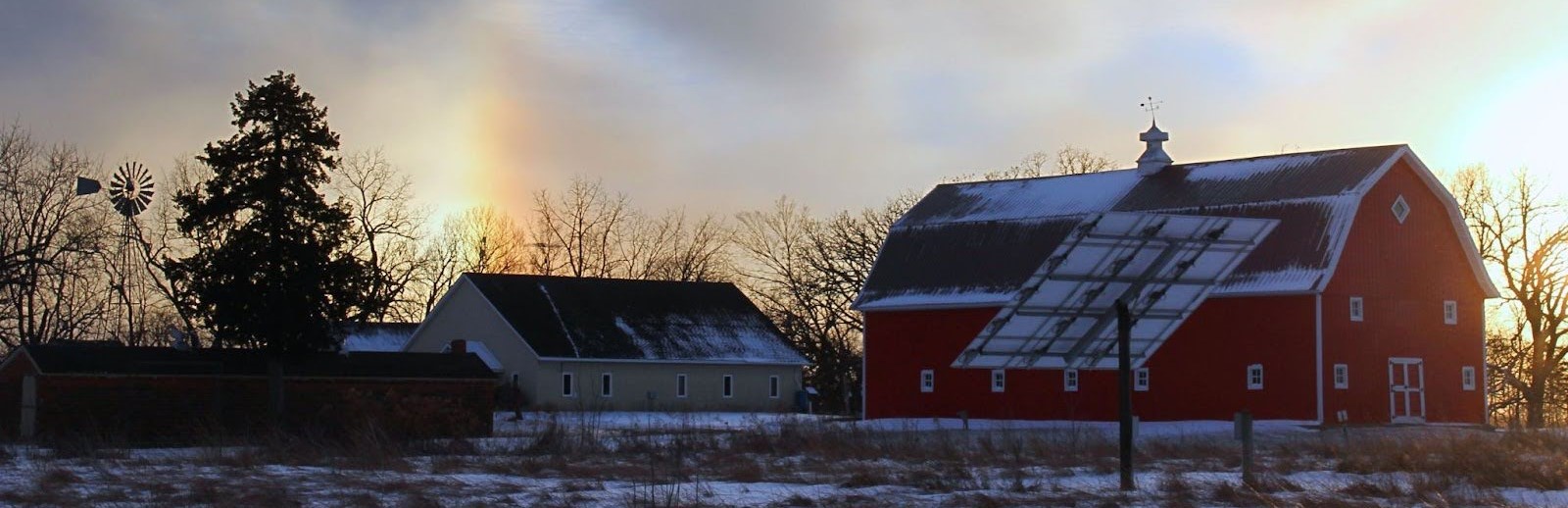
The Midwest is dotted with barns; especially out here in Henderson. They are an incredibly iconic part of our daily lives. You likely could find a picture of one somewhere in our house; either on a food product label or maybe you have a coffee table book filled with barn photographs. If you are in search of a real barn you wouldn’t have to drive far to find one. We have one here at the nature center. While we often think of barns simply as a home for farm animals, they actually have a wide variety of purposes today. They often get used as gathering places, wedding venues, storage or workshops.
In the late 1800s, when the farmstead here at the Ney Center was first built, a barn would have been an important building to have on the farm. Primarily it would have served as a home for the animals; keeping them warm in the winters and safe from predators at night. Cows would have been milked every morning and evenings and in the summer. Horses were kept and used for plowing fields, and pulling wagons. If you were a child, it may have been your job to take the animals out to the pasture or maybe carry water from the well into the barn. Mucking out the stall was another important task.
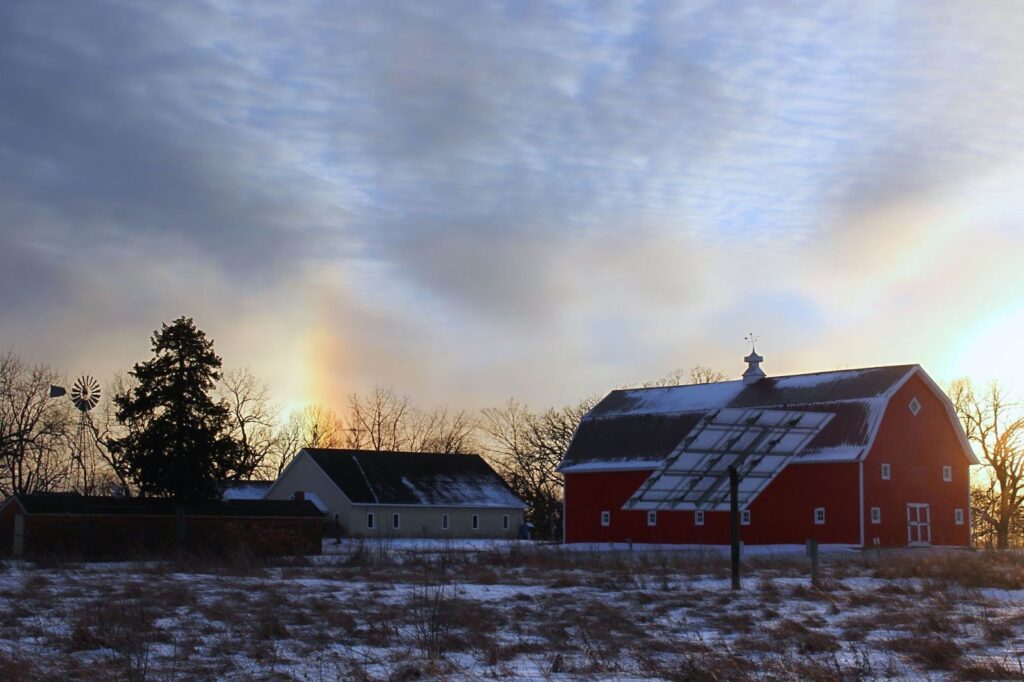
Just like today barns were used for many types of storage. The main level of the barn would have been used for storing a wagon, a plow, horse harnesses, and any other farm tools, maybe a work station for repairing. The upper portion of the barn was commonly referred to as the “hay mow.” Mow (rhymes with cow) is an older English word that refers to a pile or stack of crops. After the hay has been grown, and harvested, it would be stored loosely in the upstairs of the barn. This would have to supply the animals with food for the winter.
Barns weren’t just a place of storage or where the animals lived; they were also an important place of community and togetherness. If you needed to build a barn quickly, a barn-raising party, with all your neighbors, was a good way to meet people and help each other out. In the fall neighbors might gather to help each other harvest and store their crops. Perhaps shuck the corn together and see who could do it the fastest. When all the work was all done, and the sun had gone down, the barn may be transformed into the dance floor.
While barns no longer serve the same purposes as they did in the 1800s, they can still bring people together. Our big barn stands as a focal point when you drive up to the Nature Center and it helps us as we work to serve and connect with our community just like barns did many years ago.