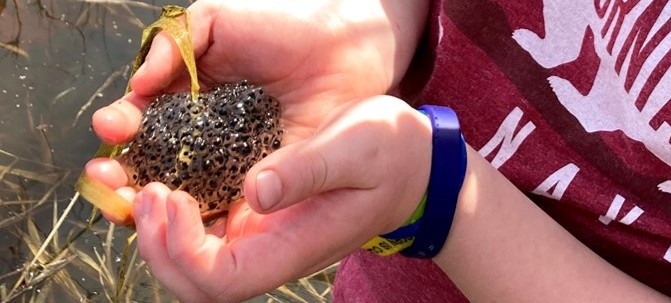
It’s nearly frog season here at Ney; most North Leopard frogs will start looking for a mate and laying their eggs right around the end of April1. These little creatures are a very important part of the food web as pest control and as food for larger creatures. However, these fascinating creatures have been in documented decline since the 1960s. Part of an overall global amphibian decline that herpetologists (reptile and amphibian scientists) have been studying for decades.2
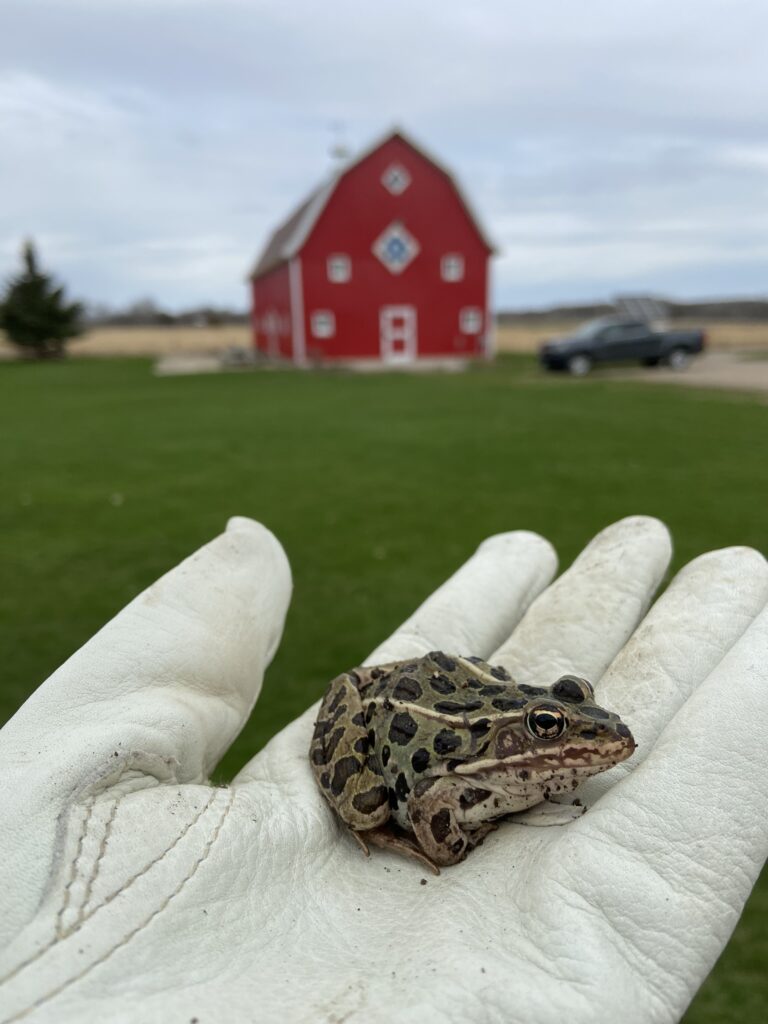
In the 1990s the pond here at the Ney Center was in the center of this conversation on the general well-being of amphibians in Minnesota. It started on August 5, 1995 with a group of students from Henderson’s New Country School. They were on a field trip to the Pond when they noticed some deformities in the frog populations. Judy Helgen from the Minnesota Pollution Control Agency (MPCA) came to check out the frogs and found that nearly 40 percent of the frogs at the Pond had deformities of some kind; extra limbs, missing limbs, skin webbing or other limb malformations.3
This discovery at the Pond launched a six year investigation into the causes of the frog deformities by the MPCA. During the investigation Dr. Helgen presented her research on deformed frogs in Prague at the Third World Congress of Herpetology. Which helped spark an worldwide interest in the causes of frogs deformities. While no definitive answer was ever found for the Ney Frogs deformities, scientists presented three main causes of frog deformities; parasites, chemical contamination (from pollution, pesticides, and fertilizers), and increased UV-B radiation (from changes in the Ozone Layer or alter habitat). 4
Minnesotans didn’t just sit by while their amphibian friends were in trouble. In May of 1996 Minnesota Legislators approved funding for a program called A Thousand Friends of Frogs. The goal of the project was to educate Kindergarten through Twelfth Grade students on the scientific method by directly involving the students in collecting data on their local frog populations and sharing it with scientists. The program also included resources for educational material for school children about frog habitats, life cycles, and how they could help protect them.
1 https://www.dnr.state.mn.us/reptiles_amphibians/frogs_toads/truefrogs/northernleopard.html
2 https://www.dnr.state.mn.us/reptiles_amphibians/frogs_toads/saving.html
3 Helgen, Judy. Peril In the Pond: Deformed Frogs, Politics, and a Biologist’s Quest. 2012.
4 Michael Lannoo, Malformed Frogs: The Collapse of Aquatic Ecosystems. California. University of California Press. 2008
Even though A Thousand Friends of Frogs project is no longer active we can still be the advocate for amphibians. Ney continues to monitor the health of our own frog population in the Pond (which are doing great by the way!), as well as educate the public about their importance to the world. It is our hope that you will take the time to appreciate the frog friends in your own backyard, or come visit our frogs this summer at the Ney Pond, and do what you can to help build a better world for them to thrive.